OVERVIEW
Back in 2001, a company called Sensatex, in coordination with DuPont Corporation, launched one of the first patented examples of a smartshirt. This smart system remotely monitored vital signs such as a wearers heart rate, respiration rate and calories burned. This was the beginning of a revolution in wearable fashion.
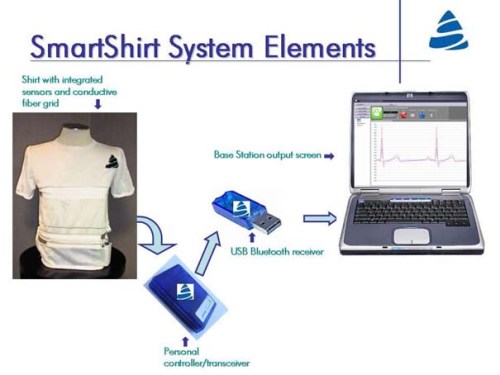
First patented SmartShirt design, 2001
Smart ‘wearable’ clothes are textile based garments that are designed with a connected lifestyle in mind. These t-shirts, jackets, pants and sportswear contain sensors that allow them to communicate with your smartphone and provide data regarding your activity and surroundings. This is also the case with jewelry and accessories; they’re both similar to activity trackers but in a different form factor.
CURRENT TECHNOLOGY
CLOTHING
Nowadays we have seamless biometric shirts that monitor
minute details that can improve a runner’s performance such as

Smart gear that is responsive to your movement can give you instant feedback and help improve athletic performance
cadence, ground contact time, pelvic rotation and stride length. Metrics such as these can help an athlete adjust his/her movements in order to prevent injuries, correct leg thrust or even boost speed!
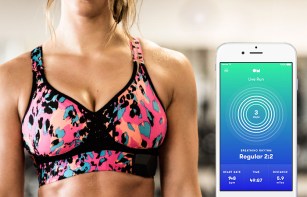
The Styling, Smart and Adjustable OMSignal Bra
Not to feel left out, women also have several gender specific options such as the OMsignal Bra which records distance, breathing rates and heart rate and also takes into consideration the qualities you look for in a good bra with adjustable straps, padding and cups to fit your needs.
Project Jacquard
Last but not least we have Project Jacquard, the hidden gem of clothing wearables. Project Jacquard is a partner platform between Google and Levi Strauss which will make connected clothing that turns the fabric into a touchscreen.
With their combined technology, Google and Levi’s have produced a conductive synthetic fabric made of thin metallic yarns which has been used to build touch and gesture areas on the sleeves of its first product the Commuter Jacket.
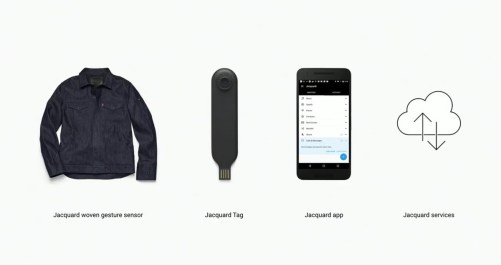
Google and Levi Strauss’ Project Jacquard
Key features of the sleeve on the Commuter Jacket (which is initially aimed at cyclists) include:
- swipe down to change music playing from your phone
- double tap to get directions
- swipe over to dismiss phone calls
And it’ll all work with Google Services (Maps, Play Store, etc.) and third party apps alike.
This is just the beginning of the illustrious partnership between two corporations that can make things happen. Eventually, Google and Levi’s plan to provide connected clothing that will boost productivity among the athletic, business and enterprise market sectors.\
JEWELRY
Besides textile-based wearables, there is a branch of smart devices labeled as jewelry and accessories. With features that include notifications and fitness tracking, your next pair of
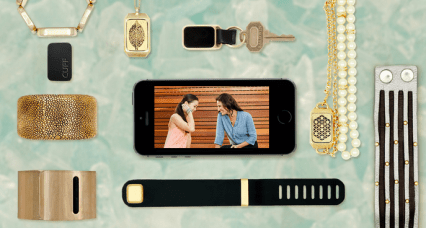
Smart jewelry is made to look like regular jewelry but can collect activity data from your movements
earrings, necklace, ring or bracelet might just be smart.
From big names such as Swarovski and Fossil to startups like Vinaya and Ringly, Smart Jewelry has been a big hit, especially with (surprise!) women who wish to track their activity throughout the day but do not want to put on an ugly wristband.
One of the main problems with current wearables are that they’re obvious and conspicuous. That’s why so many people are moving towards more fashion-conscious alternatives like the Ringly.
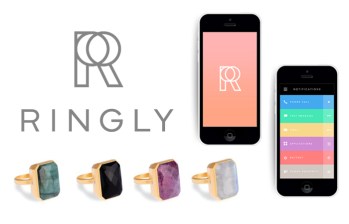
Inconspicuous, yet trendy
The Ringly is a ring wearable that is available in various semi-precious stones from Ruby to Sapphire to Emerald. Its main features consist of alerting you to calls, messages and app notifications, and more importantly contactless payments.
Another innovative example of smart fashion accessories is the Gemio. Self-described as a social wearable, the light-up Bluetooth-enabled bangle lets teens know if their friends are nearby or want to meet up.
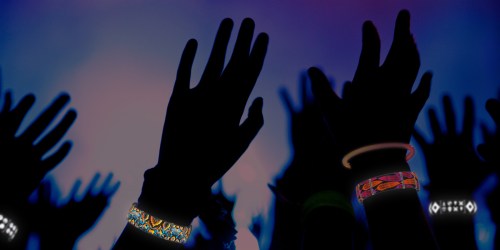
Gemio bangles are a big hit among beta users
“An inward whoosh, where the lights start on the outside and meet in the center means a ‘let’s meet up’ friendship message,” said Gemio’s CEO Michael Bettua. “Or when friends are getting together, they can send a message to say they’re thinking about it.”
As you can see, there are varying interpretations of how smart clothing and jewelry can be used in real world situations. Companies are beginning to transition from pandering to gym rats and fitness enthusiasts, and moving towards more fashion conscious consumers.
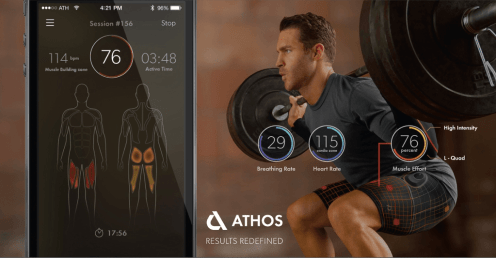
Athos gear will give you information regarding your muscle strength and workout intensity
Furthermore, smart wearable clothing can help us transition from using gadgets on our wrists to just using the clothing we put on in the morning; slipping on a smart t-shirt or putting on smart socks in the morning does not require any extra effort on your part.
This is why smart clothes are the perfect wearables for everyone.
References:
- Garcia, N. M., Sousa, P. S., Trindade, I. G., Miguel, R., & Lucas, J. (n.d.). Smart Clothing for Health Care. Advancements and Developments Telemedicine and E-Health Services, Policies, and Applications, 56-80. doi:10.4018/978-1-4666-0888-7.ch003
- Gokey, M. (2016, January 13). Why smart clothes, not watches, are the future of wearables. Retrieved July 18, 2016, from http://www.digitaltrends.com/wearables/smart-clothing-is-the-future-of-wearables/
- Google Levi’s Come Together to Tackle Wearable Technology. (2015). Retrieved July 18, 2016, from http://levistrauss.com/unzipped-blog/2015/05/google-levis-project-jacquard/
- Project Jacquard. (n.d.). Retrieved July 18, 2016, from https://atap.google.com/jacquard/
- Sensatex Launches Patented SmartShirt System to Remotely Monitor Human Vital Signs. (n.d.). Retrieved July 18, 2016, from http://www.prnewswire.co.uk/news-releases/sensatex-launches-patented-smartshirt-system-to-remotely-monitor-human-vital-signs-153504935.html
- Wright, R., & Keith, L. (2014, November/December). Wearable Technology: If the Tech Fits, Wear It. Journal of Electronic Resources in Medical Libraries, 11(4), 204-216. doi:10.1080/15424065.2014.969051
Word Count: 700
 Beyond the Wrist