Overview
Activity Trackers are the most popular wearable segment due to their ease of use and variety of choices available to consumers. Most are wireless-enabled wearable devices that include an electronic pedometer which responds to your body movement at each step and some even include a wireless heart rate sensor which determines your heartbeat in beats per minute(bpm).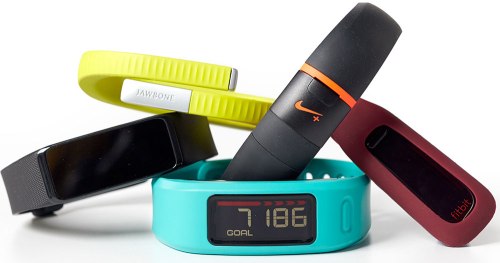
The programming behind the device is what makes it smart; from there the microprocessor inside takes into consideration your height, weight and age which is used to calculate:
- Distance covered
- Number of steps taken
- Current speed
- Average speed
- Calories burned
- Floors climbed
- Activity duration
- Intensity
- Quality of sleep
Deciding which features you need most is the first step in choosing the ideal wearable that fits your lifestyle.
Why use an Activity Monitor?
There are a variety of reasons why you would use an activity monitor such as to track your heart rate, view your current speed, analyze number of calories burned, etc. But the reason most people get a wearable fitness device is to improve their habits and get off the couch.
Having a visual reminder that you’ve only taken 200 steps today or that you need to get up and walk around because you have not moved for an hour is a simple way to lead a healthier, longer lifestyle. Furthermore, there is a whole ecosystem tied to the device in the form of websites with various features available:
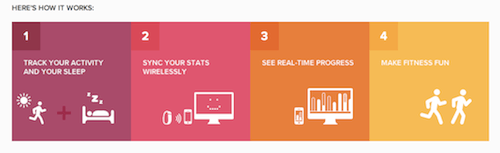
Methodology behind Fitbit’s fitness tracking and progression
- Overview of your activities
- Keeping food and activity logs
- Social network to keep you motivated
- Tracking progress toward set goals
In order to get the most out of these wearables, you’re encouraged to use the peripheral website as an aid to reaching your weight loss or activity goals!
Current Technology
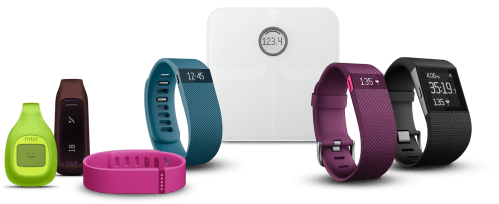
The popularity of activity trackers has spurned a transformation from ugly-looking fobs to modern and attractive bracelets. Furthermore, to attract Millennials’ as consumers, Fitbit has developed a variety of colors and features to fit your style.
Fitbit
Hands down the most popular wearable tech brand is the Fitbit. Initially introduced in 2007, it has gone through several iterations which have made the wearable easy to wear, simple to use and with improved sensors.
There are a wide variety of Fitbits available but we will focus on the 3 most popular models.
Fitbit Zip
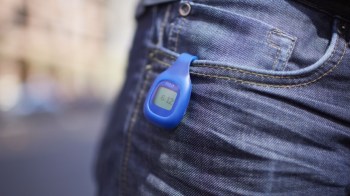
Fitbit Zip
At a very budget friendly price, the Fitbit Zip keeps track of your steps, calories and distance while also syncing wirelessly with your phone. It is sweat, rain and splash proof, containing a small display showing the time. Furthermore, it has the longest battery life of any Fitbit, a smashing 6 months!
Fitbit Flex
The Flex is the one of Fitbits older yet most successful wrist wearable. It has a battery life of around 6 days, water resistant (Fitbit recommends you do not go
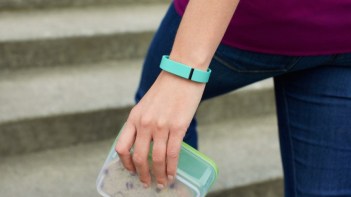
Fitbit Flex
swimming with it on) and offers sleep tracking features.
Downsides to this device include:
- not having a screen
- not being able to measure your heart rate
But for the price it definitely gives you your bang for your buck.
Fitbit Blaze
In a display of arrogance to smart watch makers, Fitbit has decided to cross the barrier between an activity tracker and a watch. The Fitbit Blaze is the most feature-rich activity tracker that Fitbit has to offer. It includes heart rate monitoring, colorful display, changeable watch bands and automatic exercise detection. On the smarter side of things, the Blaze connects wirelessly to your smartphone and offers caller ID, text notifications, and music control. If you are looking for a device to do it all, this is the one to get.
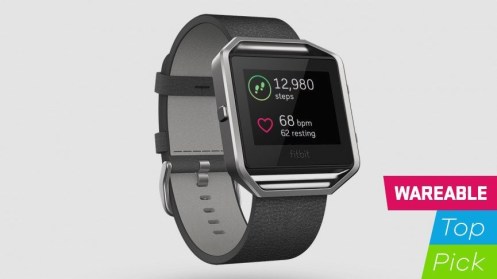
Is it a fitness tracker or a smart watch? Meet the all-in-one Fitbit Blaze
What’s Next?
Ideally, the best way to track your activity is by wearing stuff you already wear: a shirt, shorts, shoes, jewelry etc. The next major development in activity tracking wearables is expected to be in the area of clothing and accessories. Having a wristband with specialized features is something that some people could be turned off by.
If you can buy stylish and comfortable clothes that can connect to your phone and provide data, it would be one thing less to remember to plug in each night.
References:
- Charara, S. (2016, June 22). Which Fitbit tracker should you buy? Retrieved July 18, 2016, from http://www.wareable.com/fitbit/what-fitbit-tracker-should-you-buy
- Find your fit. (n.d.). Retrieved July 26, 2016, from https://www.fitbit.com/compare
- Greene, K. (2008). Self Surveillance. Retrieved July 18, 2016, from https://www.technologyreview.com/s/410806/self-surveillance/
Word Count: 686
 Beyond the Wrist